
What are Shantung Ties?
Quick Answer
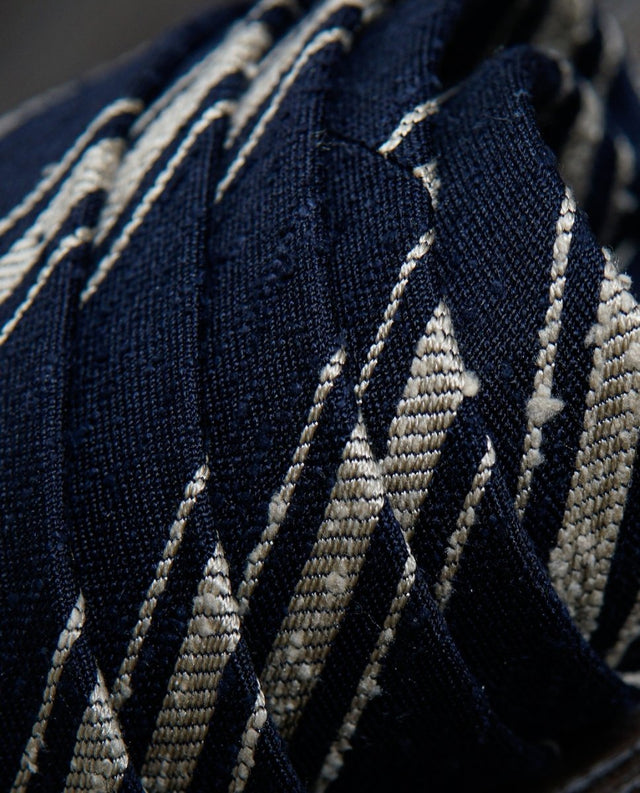
A shantung tie is a silk tie woven from slightly uneven yarns that create visible slubs and a soft matte texture. It sits between formal and casual, pairs beautifully with linen and hopsack, and works well year round.

Why shantung is special?
Shantung silk preserves the natural character of silk yarns. The intentional irregularities, or slubs, create ridges that catch light subtly, giving the cloth texture without gloss. That texture gives knots three dimensional shape and makes a shantung tie read as carefully crafted rather than flashy. High quality shantung often comes from specialist weavers and can be rarer than standard printed silk, which explains its price premium.

Where shantung comes from
The name comes from Shandong province in China, where the style originated. Over time the weaving and finishing have moved and adapted, and some of the finest shantung cloth used for luxury ties is now woven in northern Italy. The tradition spans hand techniques and modern looms, but the defining factor remains yarns with intentional unevenness.
How shantung is made
-
Silk filaments are reeled from cocoons and spun into yarn.
-
Yarn is left with slight thickness variation on purpose.
-
Those yarns are woven so the slubs remain visible.
-
The cloth is finished to preserve texture rather than polishing it smooth.
Because the slubs are structural, shantung often feels crisp. That crispness helps a tie hold a clean knot and a pleasing dimple.
Shantung versus similar fabrics
| Fabric | Look and feel | Best uses |
|---|---|---|
| Shantung | Textured with visible slubs, soft matte finish | Linen suits, hopsack jackets, less formal business looks |
| Grenadine | Open weave, airy texture, subtle sheen | Classic business suits, formal settings |
| Tussah / Tussar | Wild silk texture, slightly coarser | Rustic tailoring and unique pocket squares |
| Twill silk | Smooth with diagonal weave lines | Formal office wear |
How to wear a shantung tie

Seasons: Shantung ties are traditionally worn in spring and summer due to their light hand and breathable feel. That said, they also work well in autumn and winter when paired with flannel, tweed, or heavier jackets.
Jackets and suits: Shantung pairs beautifully with linen, cotton, hopsack, solaro, and softly structured wool suits. It is best avoided with ultra formal or glossy fabrics.
Shirts: Oxford, chambray, end on end, and fine poplin. Small stripes and micro checks pair well since the tie already provides texture.
Knots: A four in hand or double four in hand knot suits shantung best.
Classic widths between 8 and 8.5 cm create balanced proportions and a clean knot.
Construction and quality details that matter
A tie’s fabric is only part of the story. Here are construction cues to assess quality.

-
Three fold vs seven fold. Three fold is classic and balanced. Seven fold can give a fuller drape and softer fall when executed well.
-
Hand rolled edges. These add a soft, rounded profile and are a hallmark of careful finishing.
-
Interlining. A wool or wool blend interlining gives shape without too much bulk. Cheap polypropylene or polyester interlining will feel lifeless.
-
Slip stitch. A loose hidden stitch lets the tie relax and return to shape after wear.
-
Tipping. Untipped or lightly tipped edges keep the tie airy. Heavily tipped ties have a different fall.
Look for even slub distribution, clean hand roll stitching, and a knot that forms easily and sits with a defined dimple.
Care, storage and longevity
-
Always untie and hang the tie after wearing.
-
Roll the tie for travel.
-
If creased, steam gently. Avoid pressing with a hot iron.
-
Spot clean only. For serious stains, use a specialist dry cleaner experienced with silk ties.

Shantung ties are appreciated for their texture, balance, and quiet character. At Wilmok, we focus on careful fabric selection and thoughtful construction so each shantung tie remains versatile, refined, and easy to wear across seasons.
0 Comments
There are no comments for this article. Be the first one to leave a message!